Understanding how insurance works
30 October 2025
2 min read
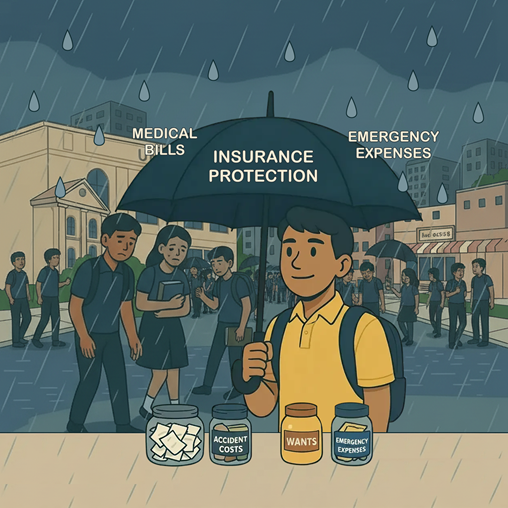
Think insurance is something only ‘adulting adults’ bother with? We get it — when money’s already tight and you’re young and healthy, it feels like an extra cost you can skip.
But here’s a better way to see it: insurance isn’t just about bracing for a disaster. It’s a smart backup plan, like a safety net that catches you when life throws you a curveball, whether that’s a hospital bill, a damaged laptop, or a surprise dental operation. You don’t buy it because something might go wrong. You buy it so you won’t be financially wrecked when it does.
What is insurance?
At its core, insurance is a way of sharing risk. You pay a fee (called a premium) to an insurer. In return, they promise to help cover big costs if something goes wrong — like medical bills, property damage, or even income loss. Instead of taking the full financial hit yourself, you get financial backup.
Before we dive deeper, let’s break down some lingo that might pop up along the way:
Glossary of common insurance terms
| Term | What does it mean? |
|---|---|
| Premium | Amount you pay (monthly, quarterly, half-yearly or yearly) to keep your insurance coverage active. It’s like a subscription fee for protection. |
| Coverage | What your insurance protects you from. Could be hospital bills, accidents, critical illness, etc. |
| Policy | Official contract between you and the insurer. It states what’s covered, what’s not, and how much will be paid out. |
| Claim | When you request money from the insurer after something happens. For example, if you get hospitalised and want them to pay part of the bill. |
| Deductible | Amount you have to pay first before your insurance starts to chip in. |
| Co-insurance | Percentage of the bill you have to pay after your insurance kicks in. For example, 10% of a $1,000 bill = $100. |
| Rider | An add-on to your insurance plan that gives extra coverage (like reducing your co-insurance or covering specific treatments). You have to pay for riders. |
Why should you buy insurance?
- Life is unpredictable: Accidents, illnesses, even theft — these things happen, no matter how careful you are.
- Medical costs can stack up quickly: A simple A&E visit without insurance could set you back by hundreds, or even thousands of dollars.
- Your family might be affected too: If they need to step in to pay your bills when something bad happens to you, that’s extra financial strain for them.
Still thinking, ‘I’m young and healthy, insurance can wait?’ Here’s the kicker - the earlier you get insured, the cheaper it usually is. Premiums go up with age, and some coverage options close off once health issues appear. Start young, lock it in low.
Pro tip:
Yearly payments usually have better rates than monthly payments, which means more savings in the long run! However, do choose a payment frequency that suits your needs.

Was this helpful?
Leave a feedbackRelated articles
What types of insurance do you actually need
What insurance does CPF already cover