Keep your tax records like a pro
30 October 2025
5 min read
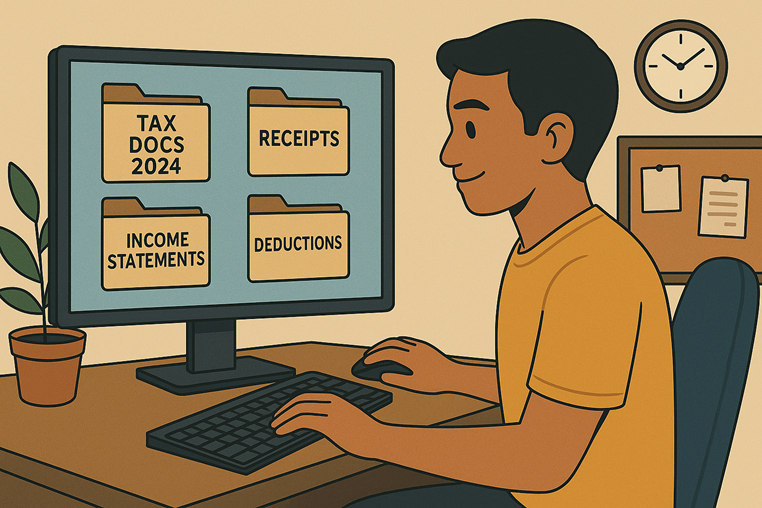
Organising your tax records doesn’t have to be some boring admin chore. Think of it like setting up your own ‘tax HQ’ — a place where you can always find the info you need. It’s not just about avoiding chaos during tax season; it’s also about making sure that you can substantiate your claims if IRAS requires verification.
Here’s how to level up your record-keeping game.
Why keeping tax records matters
- Proof of accuracy: In case IRAS wants to verify your claims
- Easy reference: For next year’s filing or checking reliefs
- Peace of mind: No more digging through emails or lost files
- (For self-employed person) Make better business decisions: When you are aware of the financial status of your business, you can make better business decisions
You are required to keep records for 5 years. However, you do not need to submit your supporting documents when filing your income tax return, unless requested by IRAS.
What documents should you keep?
- Pay slips
- Form IR8A (if your employer is not submitting your employment income to IRAS under the Auto-Inclusion Scheme)
- CPF statements
- Business records, invoices and receipts for your income and expenses claimed*
* You will only need to keep business records (e.g., register, listing, statement of accounts) without the need to keep supporting documents (e.g., receipts, invoice) if:
- you are a self-employed person, sole-proprietorship or partnership;
- your annual gross revenue is not more than $200,000 for the past two financial years; and
- you are eligible for Simplified Record Keeping.
For more information, please refer to Simplified Record Keeping Requirements for Small Businesses.
Digital is your best friend
No need to print everything and stuff it into a shoebox. Use free tools or apps you already have:
- Google Drive or Dropbox: Create a ‘Tax Docs’ folder by year
- Note-taking apps: Snap photos of receipts and label them
- Email folders: Set up a filter to auto-label anything from IRAS or CPF
Example: What good digital record keeping looks like
Let’s say you wish to claim the following employment expenses that you have incurred for official work purposes and are not reimbursed by your employer:
- $100 entertainment expenses incurred when entertaining your existing clients
- $30 public transportation expenses (e.g., Grab fares) to travel from your office to a client’s office
If you want to claim tax deductions for any of these employment expenses, you’ll need to keep proper records and receipts.
Instead of scrambling later —or worse, losing them because the physical receipts have faded— follow these 3 simple steps:
| Step | What you need to do |
|---|---|
| Step 1 |
For physical receipts (e.g., meals at restaurant with your clients):
|
| Step 2 | Store both physical receipts and digital receipts (e.g., Grab fares e-receipt) immediately into your ‘202X Expenses’ folder |
| Step 3 | Record these expenses in your Employment Expenses Schedule so they’re ready when you file your taxes next year! |
If you are earning self-employment income, you can also do the same. You will also need to keep track of your income, business expenses and prepare your Statement of Accounts.

Was this helpful?
Leave a feedbackRelated articles
Smart ways to plan your tax payments
Tax reliefs, deductions, and rebates