Your first credit card: How to choose it and read the statements
31 October 2025
6 min read
You’re scrolling Shopee, eyeing that cashback card because it looks like a good deal. But before you jump in, let’s break down what really matters when choosing your first credit card.
If the idea of credit cards makes you nervous, you’re not alone. Afterall, many of us grew up hearing only the scary stories. But when you understand how they work, you can use them responsibly and avoid common traps.
What’s a credit card?
It’s not free money. It’s a short-term loan from a bank that you promise to repay. If you pay it off in full every month, you won’t be charged interest.
But if you can’t repay or only pay the minimum, the bank starts charging you late fee and interest - usually around 25% - 28% per year. You might think, ‘25% a year is not a lot, what!’, but that 25% doesn’t hit you all at once. It compounds daily, which means the real damage builds fast.
|
Example: You racked up a $1,000 credit card bill because it’s your birthday month and you believe in treating yourself. However, you only pay the minimum, usually $50, cos, why not? But here’s the catch: your bank charges about 0.00068% interest per day on whatever’s left. So, after that $50 payment, you still owe $950. Roughly $19 in interest gets added back in, bringing your balance to about $969. If you repeat this monthly for a year, you’ll have paid around $600, but still owe roughly $830-850. That means only about $150-170 of your debt is gone. The rest went straight into interest charges. This snowball effect is what traps many people. The less you pay now, the more you owe later, and fast. |
That’s why it’s important that you only buy what you can afford, and always pay your credit card bill in full and on time!
Features you should understand:
- Annual fees: Some cards charge up to $200/year. Look for cards with waived fees for the first 1–2 years, or contact your bank—they may waive it if you use the card regularly.
- Credit limit: The maximum you can spend, usually 2–4x your monthly income.
- Interest-free period: Typically 20–25 days. Pay your full statement before the due date to avoid interest.
- Late fees: Missed payments can trigger $100+ penalties.
- Rewards and rebates: Cashback, miles, or points. Only spend to earn rewards if it fits your lifestyle—credit cards are loans, not free money.
Red flags to avoid:
- Spending extra just to hit cashback thresholds.
- Owning multiple cards while still learning to manage one.
- Using a credit card to pay off another—this can spiral out of control.
How to read your credit card statements:
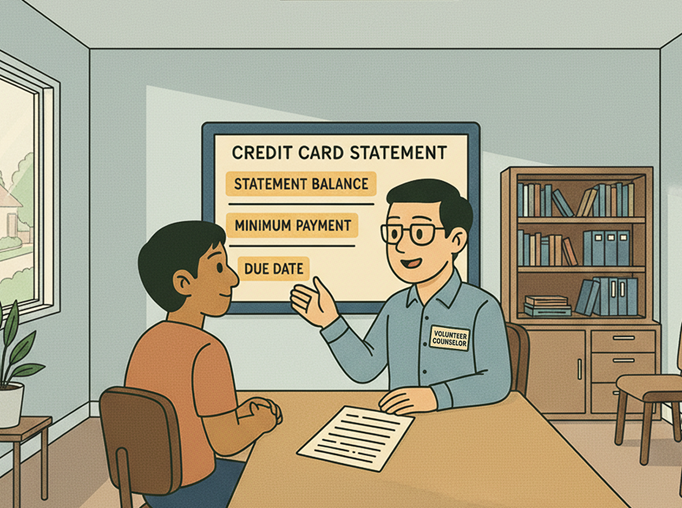
Getting your first credit card statement can feel like trying to read a foreign language. There's a wall of numbers, with strange terms like ‘statement balance’ and ‘minimum due’. But don’t worry — once you know what to look for, it's actually pretty simple.
Why it matters:
Understanding your credit card statement helps you stay in control of your spending, avoid hidden charges, and prevent debt from creeping up on you. Ignore it, and you might miss out on reward points. Or worse, rack up interest without realising.
What to look out for in your statement:
- Statement balance vs. minimum payment
- Statement balance: The full amount you spent in that cycle. Aim to pay this off.
- Minimum payment: The smallest amount you must pay (usually 3% of statement balance or $50, whichever is higher). Paying only this means interest starts building on the rest.
- Statement date vs. payment due date
- Statement date: The day your billing cycle ends. This is when the bank tallies up your spending for the month.
- Payment due date: Usually 20-25 days later. Pay in full by this date to avoid interest.
- Transactions list
- This shows every purchase, refund, or fee - from $4 bubble tea to your $60 Shopee spree.
- Check for errors or strange charges. Contact the bank immediately if something looks off.
- Credit limit and available credit
- Your credit limit is how much you're allowed to spend.
- Available credit is what's left. Maxing it out hurts your credit score.
- Rewards summary
- Some statements show how many cashback dollars, miles, or points you earned.
- Make sure your spending is actually helping you hit those rewards (and not just draining your bank).
Want something interactive?
Check out DBS’ Understanding Credit Card Statement webpage.

Was this helpful?
Leave a feedbackRelated articles
Stay out of credit card debt
How to make the most of credit card rewards