How to plan your renovation and decide if you need a loan
27 October 2025
6 min read
Just collected your keys and already picturing that Muji-style home or TikTok-famous kitchen island? Renovating your first place is exciting, but it can also feel like a big leap. You’re not expected to know everything but you do need to plan wisely. Let’s walk through how to turn those dreams into reality without burning through your savings. You can also get design ideas from the MyNiceHome website or the show flats at the MyNiceHome Gallery located at HDB Hub.
How much do renovations typically cost?
- 3-room flat: $30k–$45k
- 4-room flat: $40k–$60k
- 5-room flat: $50k–$70k
These estimates include carpentry, flooring, lighting, and basic appliances. If you’re into full-on Pinterest aesthetics or branded fittings, the costs will snowball.
Before you even start
Make sure that your renovation savings are separate from your emergency fund savings. You don’t want to be in a situation where a real emergency happens, and you have to dip into your renovation funds.
Step-by-step reno planning:
- Set a budget ceiling (and stick to it):
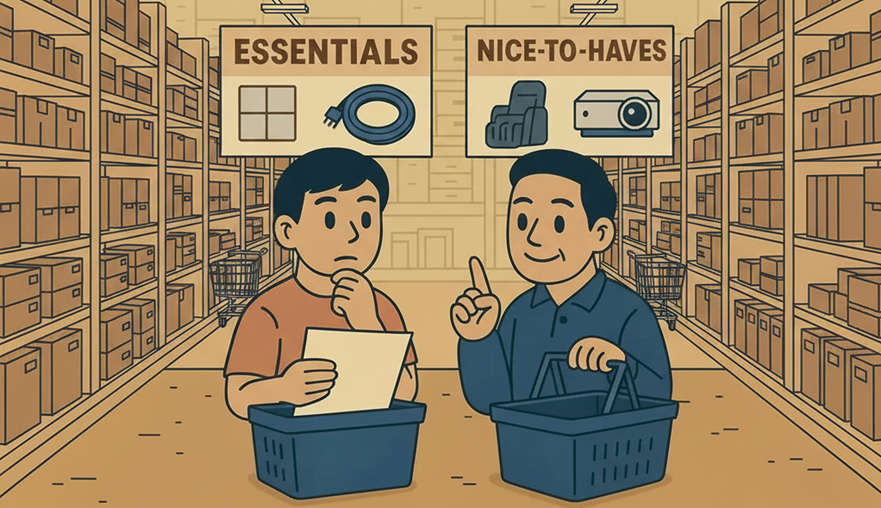
Don’t just go by vibes. Renovation costs can spiral fast if you’re not clear from the start. Sit down and map out your total budget. This includes your renovation loan (if any) and how much cash you’ve got on hand. From there, split it into clear buckets:- Essential works: Electrical rewiring, plumbing, and waterproofing — these affect safety, livability, and resale value.
- Aesthetic works and optional extras: Carpentry, tiles, feature walls — these make your home look the way you want. Smart home devices, built-in sound systems, and branded appliances are fun, but not necessary at the start.
- Emergency buffer: About 10–15%, because surprises always come.
- For example, if you’ve got $40k set aside, maybe plan $25k for essential works, $10k for aesthetic works and extras, and $5k as your just-in-case fund. Once you set these numbers, treat them like hard limits and not suggestions.
- Separate needs from wants:
This is where a lot of first-time homeowners overspend. You might want a Pinterest-perfect kitchen, but you need a space that works and lasts.- Built-in wardrobes? Probably necessary ’cos most BTOs come bare.
- Marble countertops with gold fixtures? Vibes, yes, but you can always upgrade later.
- Fancy ceiling lights with voice control? Cool, but how often will you really use them?
- Be honest with yourself: is it for daily function, or just for flexing on IG?
- Get multiple quotes:
Don’t sign with the first Interior Designer who offers a ‘limited-time promo’. Talk to at least three firms — ideally a mix of design-and-build studios and individual contractors. It’s even better if an ID comes highly recommended by friends and family. Ask for:- A breakdown of materials (e.g., laminates vs quartz)
- Detailed scope of work (not just kitchen reno — what exactly is included?)
- Timeline and payment schedule (so you don’t kena surprise charges halfway). Never pay the full amount up front. ID firms have been known to go bankrupt before completing renovations.
- Even if prices are similar, how they explain things says a lot about their transparency.
- Make sure everything is in writing by signing a contract.
- Plan a reasonable timeline:
Renovation usually takes 6 to 12 weeks — if everything goes smoothly. But delays are common, especially near the Chinese New Year holidays or if materials need to be imported. Add at least a 2-week buffer so you don’t end up chasing your ID like it’s your full-time job.
Pro tip:
Look for HDB-licensed contractors on the Directory of Renovation Contractors. These contractors generally have a good track record, so they’re less likely to scam you.
Should you take a renovation loan?
A renovation loan is a type of personal loan specifically for home upgrades. It usually comes with a lower interest rate than general personal loans, but can only be used for renovation-related expenses.
Loan features to compare:
- Loan amount:
- Up to 6 times your monthly salary or $30,000, whichever is lower
- Minimum income: usually around $24,000/year
- Interest rate:
- Typically between 3–5% p.a.
- Some banks offer promotional rates for first-time applicants or bundle deals with home loans
- Loan tenure:
- 1 to 5 years
- Shorter tenures = higher monthly payments, but less interest overall
- Take note that many banks impose penalties for early repayment, so read the terms carefully.
- Usage restrictions:
- Loan must be used for approved works (e.g., flooring, carpentry, electrical)
- May require submission of the contractor’s quotation and invoice
Pro tip:
Don’t max out your renovation loan. Try to co-fund with savings so you don’t strain your monthly budget later.

Was this helpful?
Leave a feedbackRelated articles

Essential home insurance
Home maintenance basics for first-time owners
Why budgeting is the first step to financial success
Budgeting isn't flashy - no one's flexing about buying a Lamborghini on TikTok because they stuck to a budget. The online finance world is loud about investing and crypto, but here's the truth: budgeting is the foundation.