Should you save a fixed amount or adjust monthly?
23 October 2025
3 min read
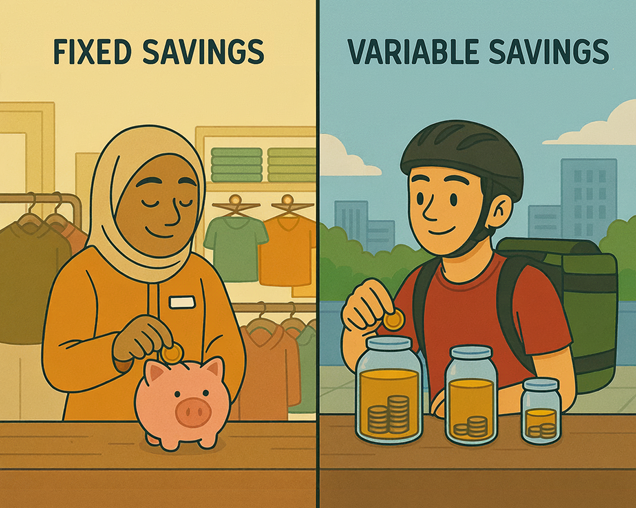
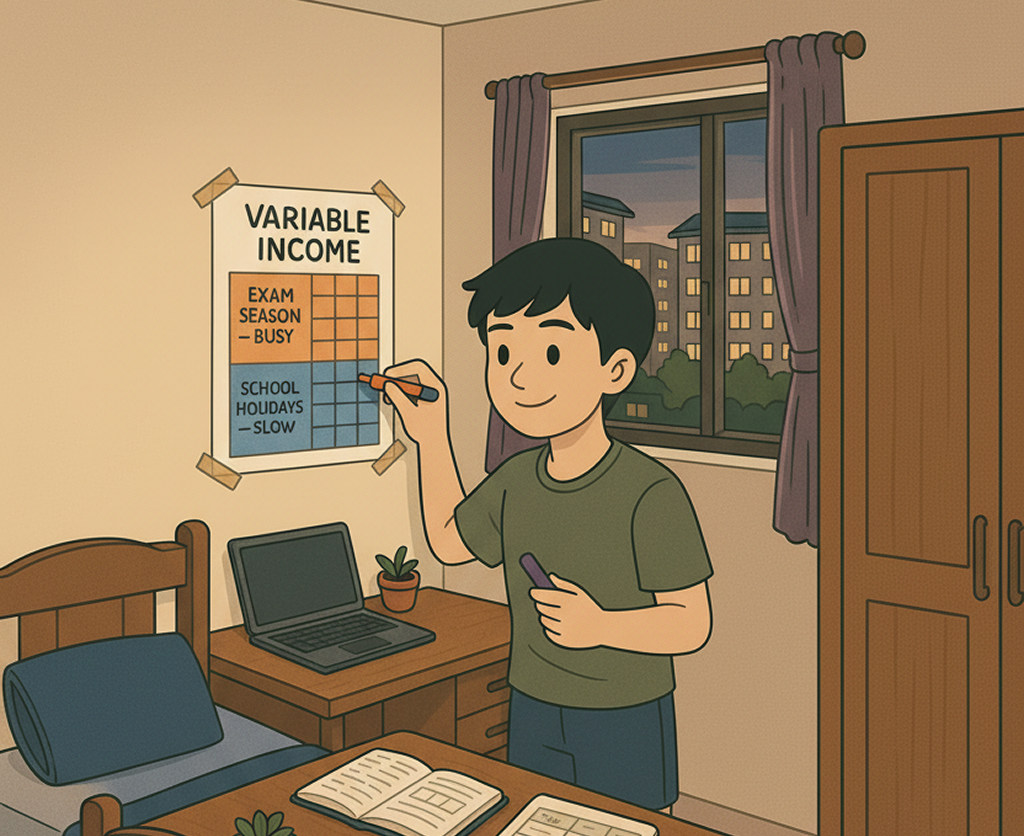
Your income isn’t always the same, and neither are your expenses. Some months, you’re raking in the money and other months, *cricket sounds*. Some months you’re eating out every day, other times it’s exam crunch and you barely leave the house. So how should you approach saving?
Let's compare
| What is this? | Best for | Pros & Cons | |
|---|---|---|---|
| Fixed Saving |
You save the same amount every month, no matter what, e.g., $100 or 20%. Example: You’re working part-time at a bubble tea shop, earning $800 monthly. You save $200 every month, no matter what. |
Jobs with regular pay and/or allowance | Pros: Builds strong discipline. Easy to plan. Cons: Can be hard during tight months. |
| Variable Saving |
You save based on what you earn that month, e.g., save 10% in leaner months, and 20% in stronger months. Example: You’re doing freelance design gigs. In January, you earned $1,200 — you save 20% = $240. But in February, your lecturer drowned you in multiple school projects, so you took on fewer jobs and earned only $500. You can’t afford to save 20% without having to beg your parents for money, so you save $50 instead. |
Freelancers, part-timers, gig workers. | Pros: More flexibility. Less pressure. Cons: Needs more tracking. Might save less for some months. |
| Hybrid Saving |
Commit to a fixed base amount, e.g., saving 10% a month no matter what happens. Then add more if you earn extra or spend less. Example: You earn $600 from part-time waitressing and make $100 to $300 more from food delivery. You save a fixed $100 from waitressing, then top up more based on delivery income. Busy month? Save extra. Slow month? Just stick with the base. |
People who want both structure and flexibility. |
Pros: Ensures consistent saving while allowing flexibility to save more when income is higher or expenses are lower. Cons: Depends on discipline for top-ups, so savings growth may be uneven if you only stick to the base. |
Which one fits you?
If your income is steady, you can’t go wrong with the fixed approach. But if your income is as unpredictable as a TikTok trend, go variable or hybrid.
Was this helpful?
Leave a feedbackRelated articles
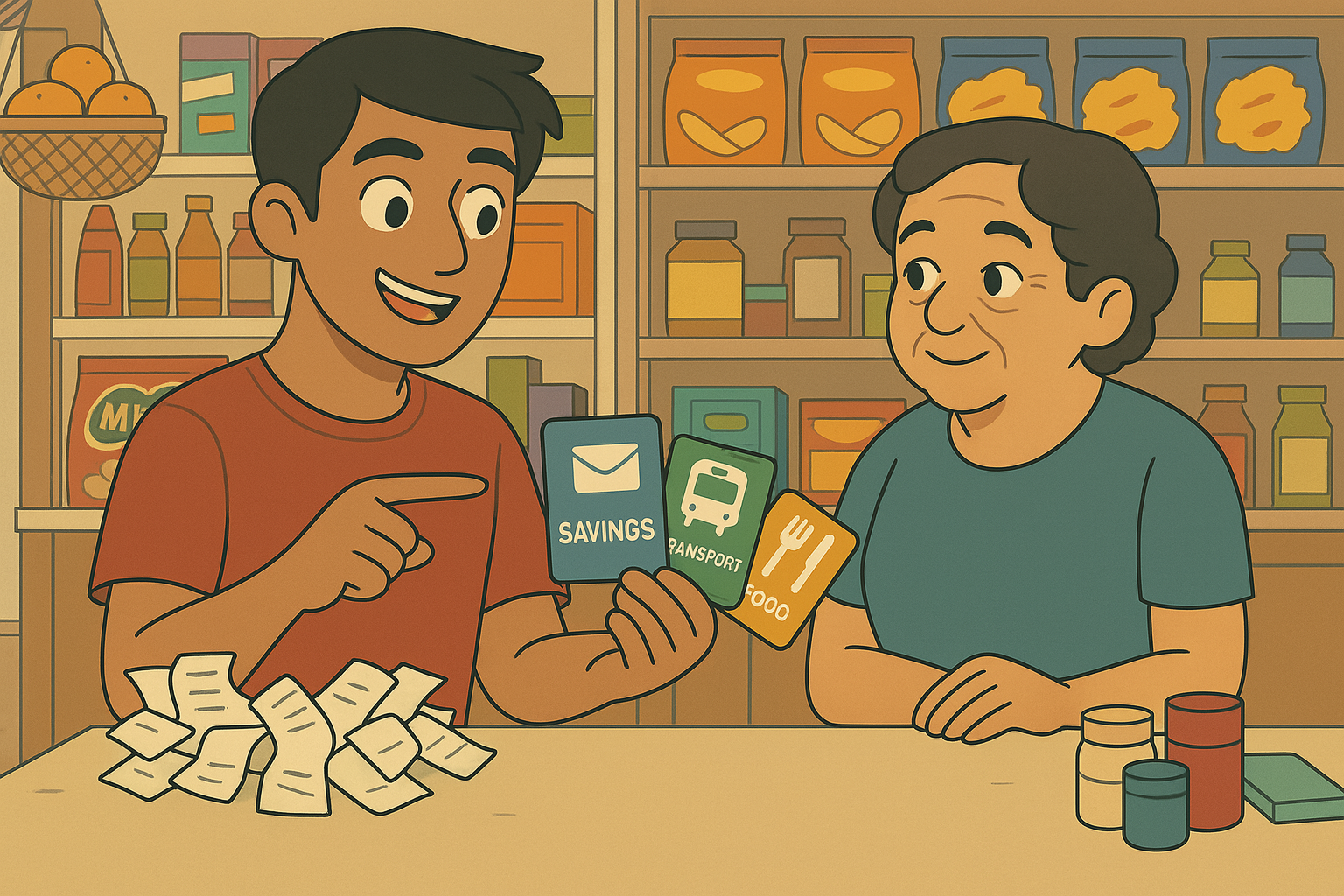
Why you need different savings accounts and how to track your savings
Saving for too many things in one account is not the most productive. When you have a small amount of savings and no clear goals, it doesn't seem to be that big of a deal. But once your savings start to grow, you might want to better manage them - after all, rojak is not something you'd want to use to describe your savings account.
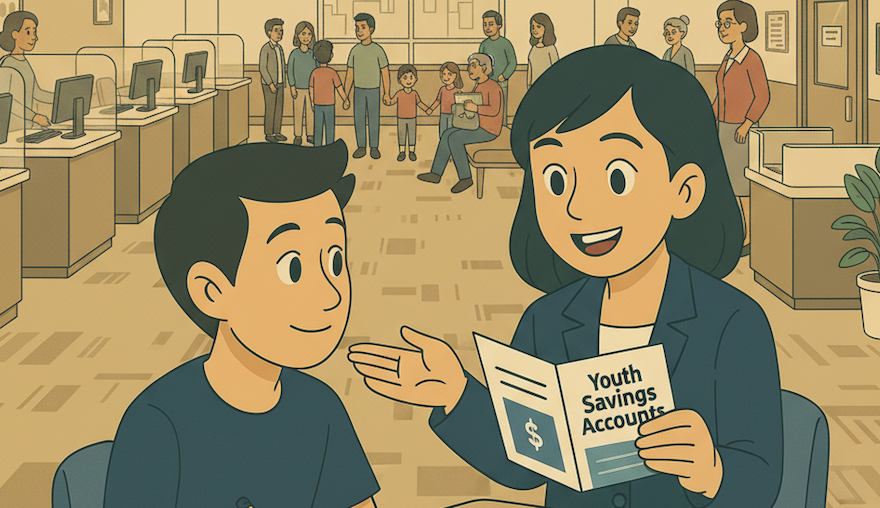
Best savings accounts in Singapore to grow your money
If you're thinking that a high-interest savings account sounds cheem and it's not for you, you're not alone. Many of us assume you need a full-time income or huge deposits to enjoy decent interest rates.
Saving with inconsistent income
Let's be real — saving money is hard. But it gets way harder when your income isn't fixed. Maybe you're freelancing, doing part-time gigs, tutoring, or running a small home biz. Some weeks you earn $500, other weeks maybe only $100.