Saving with inconsistent income
27 October 2025
5 min read
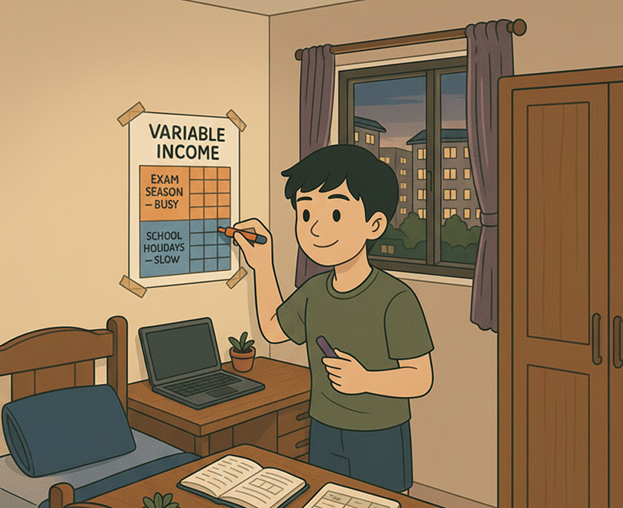
Let’s be real — saving money is hard. But it gets way harder when your income isn’t fixed. Maybe you’re freelancing, doing part-time gigs, tutoring, or running a small home biz. Some weeks you earn $500, other weeks maybe only $100.
Having an unstable income doesn’t mean you’re failing. It just means you need a different approach, and you’re doing great by figuring that out.
So, the question is: how do you save when your pay comes and goes? Practise the following and you should be well on your way to saving!
Step 1: Track your monthly income over the last 6 months
While your income might not be consistent every month, you should still be able to list what you’ve been earning every month in the last few months.
Step 2: Determine your base income
Base income is the amount you use to plan your budget each month. Here’s how you can determine your base income.
Scenario 1: If your income doesn’t fluctuate too much (meaning, it doesn’t go up or down by more than 20% each month), your base income is the lowest amount you’re confident you’ll receive each month.
| Jan | Feb | Mar | Apr | May | Jun |
|---|---|---|---|---|---|
| $1500 | $1525 | $1450 | $1525 | $1475 | $1530 |
The above example is a monthly income that doesn’t vary too much, so the base income is $1450.
Scenario 2: If your income varies significantly, use your average monthly income over the past 6-12 months as a guide.
| Jan | Feb | Mar | Apr | May | Jun | Average |
|---|---|---|---|---|---|---|
| $1500 | $1150 | $1700 | $900 | $1400 | $1900 | $1425 |
The above example is an income that varies a lot, so the base income is $1425
Step 3: Calculate your essential expenses, i.e., ‘Needs’
Start by figuring out your monthly ‘Needs’. Things like:
- Transport
- Bills
- Food
- Insurance
- Taxes
Identify how much money you need to spend monthly to survive.
Step 4: Assess if the 50/30/20 rule applies to you and save accordingly
If your ‘Needs’ do not exceed 50% of your base income, apply the 50/30/20 rule and aim to save at least 20% of your income each month.
If your ‘Needs’ exceed 50% of your base income, the 50/30/20 rule may need to be tweaked to better fit your circumstances. In this case, prioritise your spending as follows:
- First: Cover all Needs and figure out what percentage of your base income it is
- Second: Allocate funds for Savings, even if it’s a smaller amount
- Third: Spend on Wants only if there’s surplus remaining
Step 5: Create an emergency fund
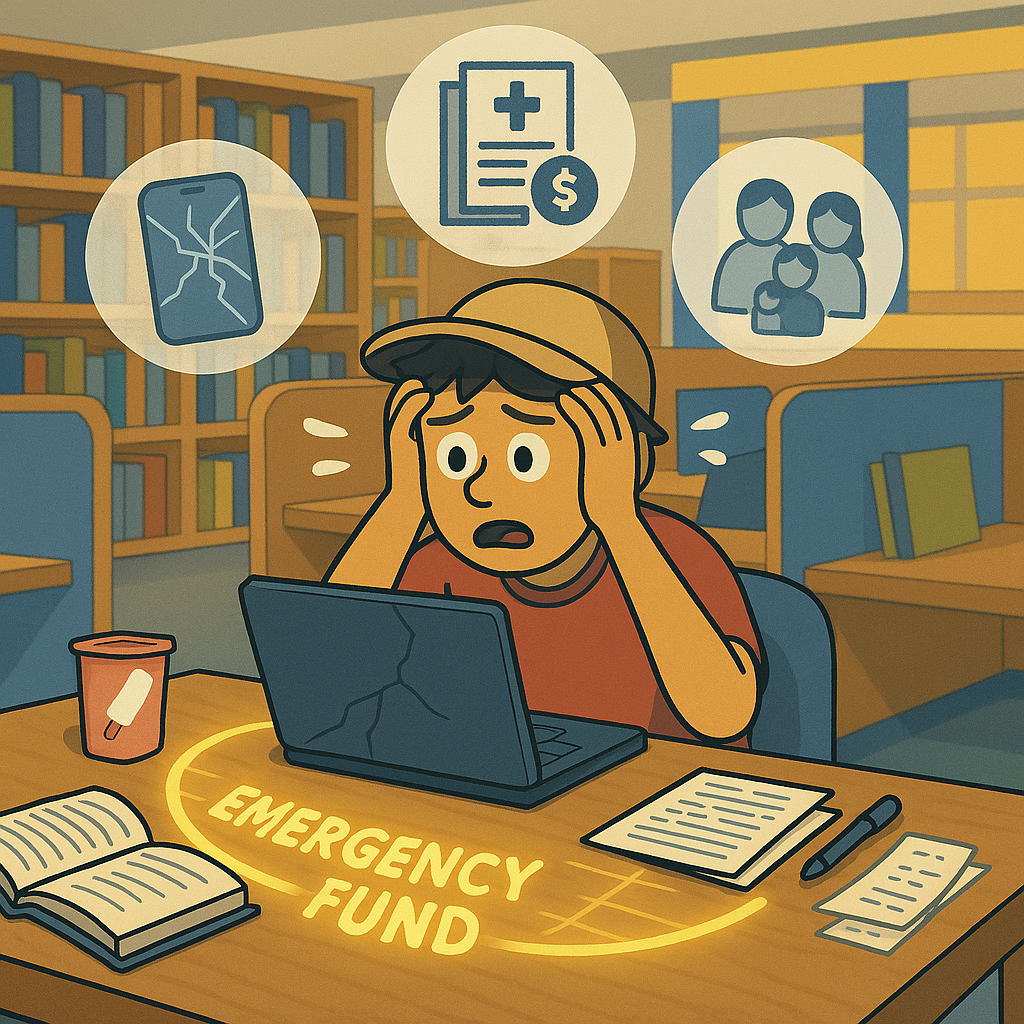
In good months, set aside extra savings equivalent to 12 months of expenses as your emergency fund, which is your personal backup for quieter months. It’s meant to help top up your income in leaner months, and it’s not the same as your standard ‘Savings’.
Saving with an inconsistent income isn’t impossible — it just takes a bit more planning and flexibility. By figuring out your base income, prioritising your ‘Needs’, and building a buffer fund, you’re creating a system that works with your income flow, not against it.

Was this helpful?
Leave a feedbackRelated articles

Tiny saving hacks that add up
You know how your Starbucks latte always costs $6.60, not a clean $7? What if we told you that the leftover 40 cents could actually help you build savings without even trying? Sounds too good to be true? It's not. Welcome to the world of 'roundup transfers' - the laziest smart money move you'll make.
What is an emergency fund?