Why savings ≠ emergency fund
27 October 2025
3 min read
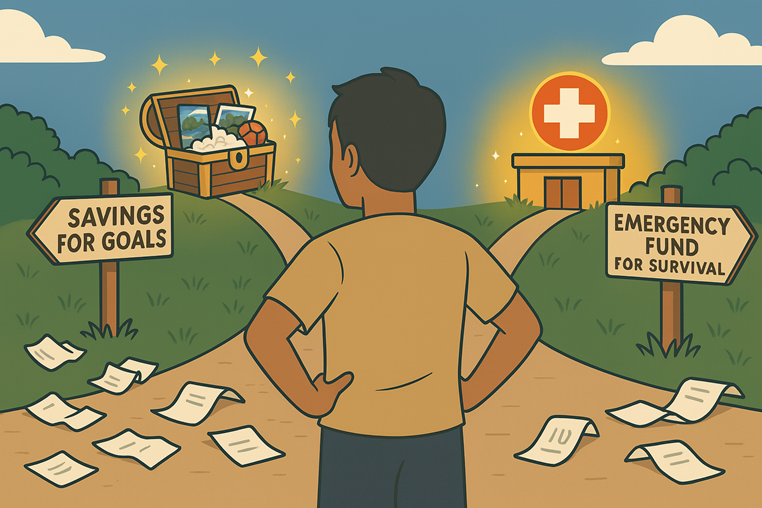
You’ve been saving money — that’s great. But here’s a truth bomb: just because you have savings doesn’t mean you’re ready for a financial emergency.
Savings = Goals.
Emergency Fund = Survival.
It’s easy to mistake savings for your emergency fund, but they’re not the same. Your regular savings are for the stuff you plan for, such as holidays, new gadgets, BTO renovations, or even your CPF top-ups. But an emergency fund? That’s for when life throws unexpected curveballs at you and you have to fork out money to address an urgent need.
If you dip into your savings every time something goes wrong, your goals get pushed further away. That’s why they should be separate.
Example:
Let’s say you’ve saved $3,000 for your BTO renovation, but your laptop broke, and you require a new one. You take $1,000 out of the BTO renovation fund.
The following month, you incur an unexpected medical bill, and you take another $500 out of that BTO renovation fund.
And the following month, some other emergency happens… you get what we’re trying to say here.
Your renovation fund doesn’t grow because you don’t have a separate emergency fund!
How to keep them apart:
- Name your accounts: Rename one ‘Emergency Only’ and another ‘Savings for [your goal]’.
- Set goal amounts: Emergency fund — aim for at least 3 to 6 months of expenses. If your income is irregular, aim to have savings equivalent to 12 months of expenses. Savings — depend on your goals.
- Automate transfers: After payday, channel some money to your emergency fund before the spending itch kicks in.
Keep your dreams safe, and your stress lower. Treat your emergency fund like a fire extinguisher — you hope you never have to use it, but it’s there if things go up in flames.

Was this helpful?
Leave a feedbackRelated articles
How to protect your emergency fund
You've built your emergency fund - well done! That's a huge step in the right direction. Now your mission is simple: keep it safe.
How to rebuild your savings after emergencies