
Oversees people strategy, recruitment, training, and employee engagement across a global and diverse workforce. Ensures compliance with labour regulations, drives organisational development initiatives to build a workforce in line with organisational needs, and manages succession planning to ensure business continuity.
- Develop and implement HR strategies that build a thriving culture and enable talent to maximise their potential
- Oversee recruitment, onboarding, talent management processes and succession planning
- Manage payroll operations in compliance with company policies and labour laws.
- Build people through training and develop leadership capacity to meet organisational goals.
Note
Maritime HR is about people, not just policies. It’s about nurturing talent - from hiring to helping them reach their potential.
A day in the life



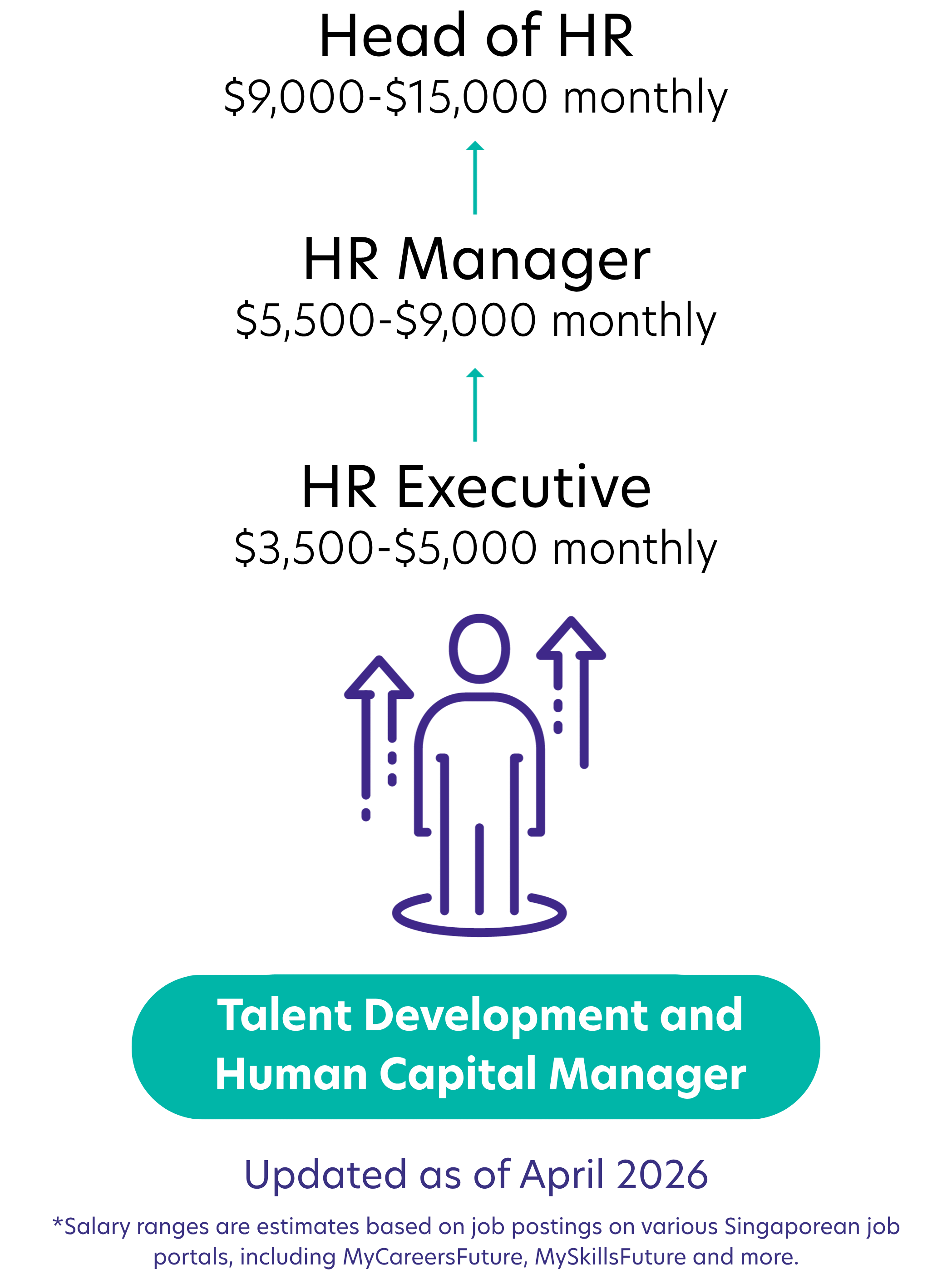
Talent Development and Human Capital Manager
From hiring to developing capacity for leadership, Rachael's career in human resources (HR) goes beyond policies - it's about building people and helping them go further.
Nature of Work
As Talent Management Executives, you’ll oversee employees while they are working for the company and guide retiring employees.
Key Advice
You will need to plan successor training, requiring keen attention to detail to identify employees with high potential.-
Entry RequirementsEntry Requirements
- Bachelor's degree or diploma in Human Resources, Business Administration, or a related field.
- Strong cross-cultural interpersonal skills.
-
Possible PathwayPossible Pathway
 Hard Skills
Local and industry-specific policies, labour regulations and unique demands of seafaring roles.
Human Resource Management Systems and People Analytics
Competence in using HR Management Systems and generating data-driven reports for payroll, performance evaluation, strategic workforce planning and decision-making.Training and Development Design
Ability to identify skill gaps and design training programmes, from mandatory regulatory courses to leadership development to meet organisational objectives. Soft Skills
Oral and written communication skills
Provide clear communication to employees, management, and external agencies to ensure HR policies and changes are understood across the organisation.Interpersonal skills
Capacity to cultivate trust and rapport with a diverse workforce that may span multiple nationalities, ranks, and operational environments.Adaptability and flexibility
Ability to navigate complex employee relations issues, resolve workplace conflicts, and adapt HR strategies to the evolving needs of the sector.Empathy
Ability to understand perspectives from employees and build trust for them to feel heard, supported and respected.Related Job Roles


Explore Other Programmes
Browse All

You have bookmarked your first item!
Find it in My Discoveries with insights on your interests!