Best ways to track your spending
20 August 2025
5 min read
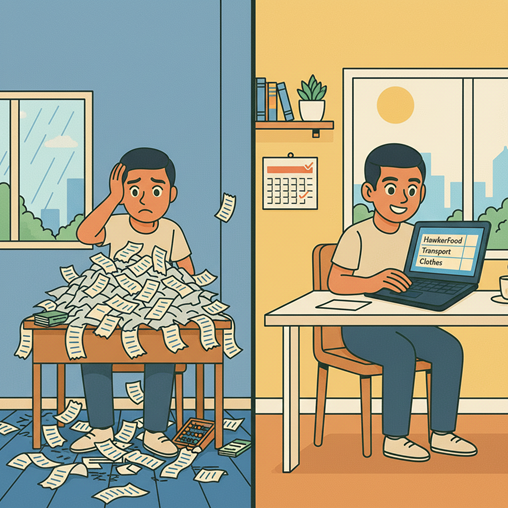
Now that you better understand the 50/30/20 budgeting rule (and may even have set your own budget), we encourage you to take note of what you’re spending on every month. You can simply look at your bank statements. You might notice certain spending habits — some are great, and some are… questionable. It’s normal to feel a bit paiseh when you look back at what you’ve spent. Be kind to yourself: awareness is the first step toward better choices.
Here are some possible patterns that you might notice:
- Spending $15–$30 daily on GrabFood or eating pricey meals for lunch daily
- Subscribing to many streaming platforms such as Spotify, Netflix, Disney+, etc.
- Weekend splurges on drinking and eating out, but eating instant noodles by the 25th
- Late-night Shopee sprees amounting to hundreds of dollars a month
If you find yourself living pay cheque to pay cheque, getting real with your spending habits will help you set a feasible budget and cut back on unnecessary spending.
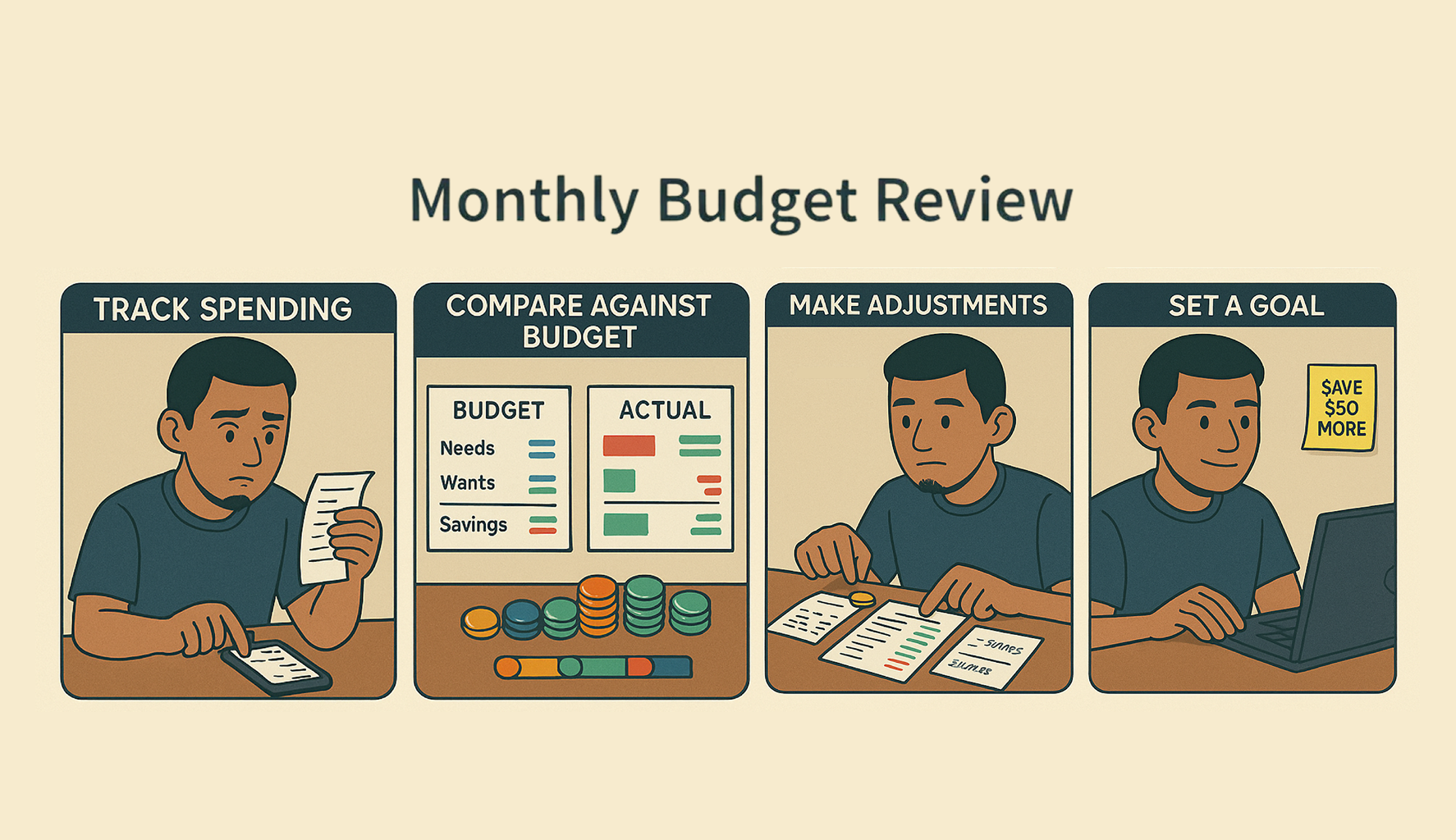
Next, you should track your spending for 1 to 3 months or at regular intervals, i.e., every 2 months, to ensure that you’re sticking to your budget. (What’s the point of a budget if you’re not sticking to it, right?)
So how do you track your spending? It depends on what works for you!
- You can track your spending using built-in features in most banking apps today. These tools often sort your transactions into categories like food, transport, or shopping, so you get a clearer picture of where your money goes.
- Prefer a DIY approach? Google Sheets or Excel works too, and there are many free templates available online. Just record what you spend daily for a month.
If you’re tracking through a spreadsheet, this is what it can look like:
| Date | Item | Category | Sub-category | Amount |
|---|---|---|---|---|
| May 3 | Grab to work | Want | Transport | $15 |
| May 3 | KOI bubble tea | Want | Food | $6.80 |
| May 4 | Chicken rice | Need | Food | $5.50 |
In order for the tracking to work, you have to be consistent and honest with yourself. If you spent $100 on Grab rides this month, indicate $100 on your tracking app/spreadsheet. Don’t downplay your actual spending to make yourself feel better.
Once you’ve tracked consistently for 1 to 3 months, you can tweak your budget to make sure it’s realistic and reasonable. For example, if you’ve budgeted $500 for ‘Needs’ and realise you’re overspending by about $100 each month, increase your budget for ‘Needs’ and reduce your ‘Wants’ budget. Try not to reduce your ‘Savings’.
When you get real with your spending habits and become more intentional with your spending, you’ll be surprised at how much more cash you have at the end of the month. Your wallet and your future self will thank you.

Was this helpful?
Leave a feedbackRelated articles
How to budget based on needs vs wants
While the 50/30/20 rule tells you how to allocate your income every month, it doesn't tell you how to distinguish between 'Needs' and 'Wants'. Here's how you can think about it.

How to budget for your goals